

A real man can shotgun a Bud, but a realer man knows his beer inside out. To use the manliest of all analogies, a car analogy, anyone can call a tow truck, but only a master of his or her own destiny can drop a transmission with a few vice grips and some cinder blocks to replace a clutch. So lets get started with the basics of beer styles, lagers and ales.
Last time I promised a no holds barred exploration of the wild sugar fed orgies of lagers and ales. Lagers and ales both contain the same ingredients: malt, water, and hops. Yet lagers are from the wrong side of the track and aren't allowed to play with ales, except in rare cases such as Anchor's Steam beer where Steam is a boundary transgressing rebel with a heart of gold. The difference between these two beers is not that lagers are dark and ales are light as many think. Far from it. Look no farther than the lackluster, nearly clear color of an American Pilsner (a variety of lager) for proof. Both lagers and ales can range from nearly clear to inky black in color. No the real difference comes from the yeast.
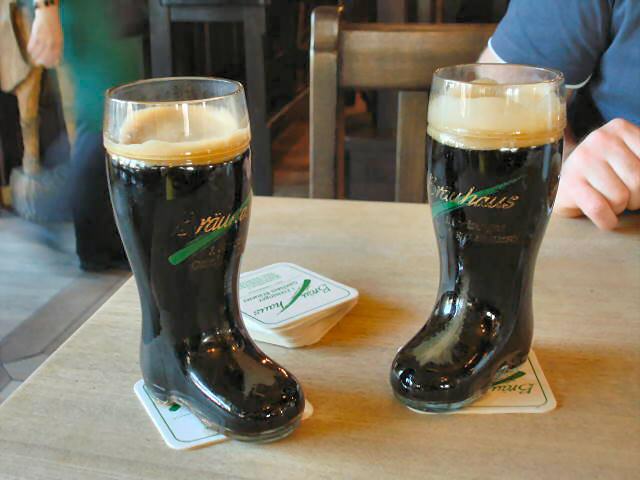
Lager yeast is bottom fermenting. That means it sits on the bottom of the fermenter while devouring sugar, multiplying at a bad ass rate (remember those sugar filled orgies? yeah not as sexy as it sounded before), and creating alcohol. As the Eskimo of beer yeast, working best at low temperatures (45 to 56 degrees Fahrenheit) for long periods of time (weeks to months depending on the alcohol). In general this colder and slower fermentation creates smooth well mellowed beer. Well aged lagers have beautiful blended flavors the same way that chili you made seems to taste better after a week than it does when you first make it.
On the other hand, ale yeast is top fermenting and prefers the balmy weather of 62 to 75 degrees Fahrenheit. The warm temperature yeast works quickly and usually doesn't blend the flavors as well. A low alcohol ale can take as little as 1 week to ferment.
Now you're an expert. Try to guess which picture is an ale and which is a lager (you may need to lick the screen to taste them to tell).


 Posts
Posts


No comments:
Post a Comment